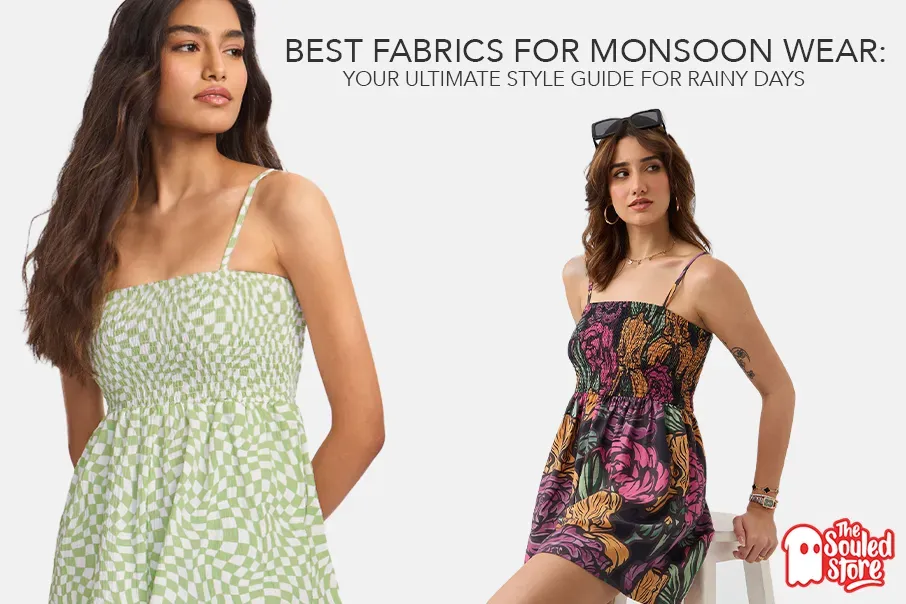
The monsoon season brings refreshing relief from scorching heat, yet it presents unique challenges for fashion-conscious women. Choosing the best fabrics for monsoon wear becomes crucial when you want to maintain style whilst staying comfortable and dry throughout unpredictable weather patterns.
This comprehensive guide by The Souled Store explores the best fabrics for monsoon wear, offering expert insights, practical styling tips, and smart wardrobe solutions that’ll transform your rainy season experience from soggy disappointment to confident elegance.
Understanding Monsoon Fabric Fundamentals
The Science Behind Monsoon-Friendly Materials
When selecting monsoon wear, three key factors determine fabric suitability:
• Moisture management: How quickly fabric absorbs and releases water
• Breathability: Air circulation preventing stuffiness and odour
• Durability: Resistance to frequent washing and humidity exposure
• Comfort: Skin-friendly properties during extended wear
Quick-Dry vs Absorbent Fabrics: Understanding the Difference
The fundamental choice between quick-dry and absorbent fabrics determines your monsoon comfort level. Quick-dry fabrics like polyester and nylon repel moisture, preventing water retention and ensuring rapid evaporation.
These synthetic materials excel in heavy rainfall situations, keeping you dry and comfortable throughout the day. Conversely, absorbent fabrics such as cotton naturally soak up moisture but release it gradually through evaporation.
This absorption quality helps regulate body temperature during humid conditions, making them ideal for indoor environments or light drizzles. The key lies in understanding when each type serves you best—quick-dry for unpredictable outdoor conditions, absorbent for controlled indoor settings with adequate ventilation.
Why Cotton, Rayon, and Nylon Are Monsoon Ideals
These three fabrics dominate monsoon wardrobes for distinct scientific reasons. Cotton’s natural cellulose fibres create microscopic spaces that allow excellent air circulation whilst absorbing excess moisture from skin, preventing the sticky feeling associated with humidity. Cotton’s breathable structure makes it perfect for extended wear during monsoon months.
Rayon, derived from natural cellulose, offers silk-like comfort with superior draping qualities that don’t cling uncomfortably when damp. Modern rayon blends incorporate quick-dry technology for enhanced performance.
Nylon stands out for its exceptional water-resistant properties, created through its synthetic polymer structure that naturally repels moisture. This makes nylon ideal for outer layers, activewear, and situations requiring maximum protection from unexpected downpours.
How to Choose Breathable Materials for Optimal Comfort
Selecting breathable fabrics requires understanding weave patterns, fibre composition, and fabric weight. Look for loose weaves like voile, chambray, or poplin that allow maximum air circulation between fibres.
These constructions create natural ventilation channels that prevent heat and moisture buildup. Fabric weight matters significantly—choose medium-weight materials (150-200 GSM) that balance durability with breathability. Avoid tightly-woven fabrics that trap air and moisture against skin.
Natural fibres generally offer superior breathability compared to synthetic alternatives, though modern moisture-wicking synthetics can perform excellently. Test breathability by holding fabric against light—if you can see through it easily, air circulation will be optimal. Consider fabric treatments like moisture-wicking finishes that enhance natural breathability properties without compromising comfort or style.
Real-Life Monsoon Fashion Challenges
Consider Sarah, a marketing executive from Delhi, who learned this lesson the hard way. During a crucial client meeting, her beautiful silk blouse became transparent and clingy after an unexpected downpour. This embarrassing experience taught her the importance of strategic fabric selection for monsoon months.
Best Fabrics for Monsoon Wear: Your Weather-Proof Arsenal
Cotton: The Timeless Monsoon Champion
Cotton remains unbeatable for monsoon wear, offering natural breathability and comfort that synthetic alternatives struggle to match.
Why Cotton Excels in Monsoons:
• Exceptional moisture absorption without clinging
• Natural temperature regulation properties
• Hypoallergenic and gentle on sensitive skin
• Easy maintenance and long-lasting durability
• Wide variety of weights and weaves available
Expert Recommendation: Choose tightly-woven cotton varieties from The Souled Store to prevent transparency when wet, and opt for cotton blends for enhanced quick-drying properties.
Crepe: The Wrinkle-Resistant Wonder
Crepe fabric’s unique textured surface makes it exceptionally suitable for humid conditions whilst maintaining professional appearance.
Crepe’s Monsoon Advantages:
• Natural drape prevents clingy, uncomfortable fit
• Wrinkle-resistant properties maintain neat appearance
• Quick-drying capabilities reduce downtime
• Versatile styling options from casual to formal
• Excellent colour retention despite frequent washing
Georgette: Elegant Moisture Management
This lightweight, semi-transparent fabric offers sophisticated styling whilst handling moisture effectively.
Georgette Features for Rainy Weather:
• Minimal water retention prevents heavy, soggy feeling
• Fluid drape maintains graceful silhouette
• Easy layering for versatile styling options
• Professional appearance suitable for workplace
• Low-maintenance care requirements
Synthetic Fabrics: Modern Monsoon Solutions
Polyester and Nylon: High-Performance Rain Warriors
Modern synthetic fabrics offer superior water resistance through advanced manufacturing techniques.
Professional Styling Tip: Combine synthetic bottoms with breathable cotton tops for optimal comfort and practicality.
Smart Fabric Blends: Best of Both Worlds
Modern textile technology creates innovative blends that maximise monsoon performance:
• Cotton-Polyester (60:40): Combines natural comfort with quick-drying efficiency
• Rayon-Lycra Blends: Offers stretch comfort with improved water resistance
• Viscose-Cotton Mix: Provides silk-like feel with cotton’s practicality
• Bamboo-Cotton Fusion: Eco-friendly option with natural antimicrobial properties
Fabrics to Avoid During Monsoon Season
High-Maintenance Materials
Certain fabrics become problematic during rainy weather, creating discomfort and styling challenges:
Fabrics to Avoid in the Rain: The Monsoon Disasters
Understanding which fabrics fail during monsoon conditions prevents uncomfortable situations and wardrobe disasters. Heavy materials like thick denim and wool become waterlogged, taking hours to dry completely whilst developing unpleasant odours and losing their shape.
Pure silk, despite its luxury appeal, stains permanently when exposed to rainwater and becomes transparent, creating embarrassing situations. Linen, though breathable in dry conditions, wrinkles excessively when wet and loses its crisp appearance instantly. Velvet and corduroy trap moisture deep within their pile structure, making them impossible to dry quickly and prone to mildew development.
Delicate fabrics like chiffon and organza become damaged easily in rain, whilst their transparency increases dramatically when wet. These materials should be reserved for indoor occasions or completely dry weather conditions to maintain their integrity and your comfort throughout the monsoon season.
Avoid These Monsoon Nightmares:
• Pure Silk: Stains easily, loses shape when wet, expensive to maintain
• Heavy Denim: Extended drying time, uncomfortable when damp
• Velvet: Traps moisture, develops odour, loses texture
• Linen: Wrinkles excessively, becomes transparent when wet
• Wool: Retains moisture, develops unpleasant odour, shrinks
The Transparency Trap
Light-coloured fabrics in white, cream, and pastels become see-through when wet, creating embarrassing situations. Instead, choose:
• Deep jewel tones (emerald, sapphire, ruby)
• Classic darks (navy, charcoal, black)
• Rich earth tones (burnt orange, deep maroon)
• Vibrant prints that camouflage water spots
Colour Psychology for Monsoon Wardrobes
Strategic Colour Selection
Smart colour choices enhance both style and practicality during monsoon months:
Optimal Monsoon Colours:
• Dark Blues: Hide water spots whilst remaining professional
• Forest Greens: Complement natural monsoon ambiance
• Deep Purples: Add richness without showing stains
• Burgundy Tones: Sophisticated yet practical choice
• Printed Patterns: Effectively disguise water marks and mud splashes
Professional Monsoon Styling Strategies
Office-Appropriate Monsoon Wear
Maintaining professional appearance during rainy weather requires strategic planning:
Workplace Monsoon Essentials:
• Tailored crepe blazers in dark colours
• Polyester-blend trousers with water-resistant properties
• Cotton-silk blend shirts for breathability
• Closed-toe shoes in leather or synthetic materials
• Compact umbrellas in professional colours
Casual Monsoon Styling
Create effortless weekend looks that handle unpredictable weather:
• Chambray shirts paired with quick-dry leggings
• Cotton-polyester blend kurtis with palazzo pants
• Georgette tunics over fitted cotton bottoms
• Breathable activewear for outdoor activities
• Waterproof accessories for complete protection
The Souled Store: Your Monsoon Fashion Destination
Curated Monsoon Collections
The Souled Store understands monsoon fashion challenges, offering carefully selected pieces that combine style with functionality:
Why Choose The Souled Store for Monsoon Wear:
• Extensive cotton and cotton-blend collections
• Trendy prints that hide water spots effectively
• Affordable pricing without compromising quality
• Size-inclusive options for every body type
• Easy online shopping with hassle-free returns
Featured Monsoon Categories:
• Quick-dry t-shirts in moisture-wicking fabrics
• Comfortable joggers for indoor and outdoor wear
• Stylish co-ord sets in rain-friendly materials
• Pop-culture inspired prints that brighten gloomy days
• Layering pieces for versatile styling options
Practical Monsoon Wardrobe Tips
Essential Monsoon Styling Hacks
Transform your rainy season experience with these professional tips:
• Layer Strategically: Use lightweight cardigans or jackets for easy removal
• Choose Appropriate Lengths: Knee-length or cropped bottoms dry faster
• Invest in Quality Undergarments: Moisture-wicking fabrics prevent discomfort
• Maintain Multiple Options: Keep spare clothing at office or in car
• Focus on Footwear: Waterproof shoes prevent soggy socks and discomfort
Fabric Care During Monsoon
Proper maintenance extends fabric life and maintains appearance:
Monsoon Fabric Care Essentials:
• Wash frequently to prevent mildew and odour
• Use antifungal fabric conditioners
• Ensure complete drying before storage
• Iron on low heat to prevent damage
• Store in dry, well-ventilated spaces
Frequently Asked Questions
Can I wear denim during monsoon season?
Traditional denim takes excessive time to dry and becomes uncomfortable when wet. Instead, choose chambray or stretch denim blends that offer similar aesthetics with improved functionality.
Which fabric dries fastest after getting wet?
Polyester and nylon dry quickest, typically within 20-45 minutes. Cotton-polyester blends offer good compromise between comfort and drying speed.
Are synthetic fabrics suitable for sensitive skin during humid weather?
High-quality synthetic blends designed for activewear often include moisture-wicking properties that keep skin dry and comfortable. Always check fabric composition and choose reputable brands.
How can I maintain a professional appearance during a heavy monsoon?
Keep emergency clothing at the workplace, choose dark colours that don’t show water spots, and invest in quality waterproof accessories including umbrellas and shoes.
What’s the ideal fabric weight for monsoon clothing?
Medium-weight fabrics (150-200 GSM) provide optimal balance between comfort, durability, and quick-drying properties without being too heavy when wet.
Can I wear light colours during monsoon?
Light colours become transparent when wet and show stains easily. If you prefer lighter shades, choose printed fabrics or ensure you have waterproof outer layers.
Final Say
Mastering monsoon fashion isn’t about sacrificing style for functionality—it’s about making smart fabric choices that enhance both comfort and confidence. With proper understanding of fabric properties and strategic styling, you can navigate rainy season challenges whilst maintaining impeccable appearance.
The key lies in building a versatile wardrobe foundation using cotton blends, crepe, georgette, and modern synthetics that adapt to changing weather conditions. Remember, monsoon dressing success comes from preparation, not reaction to weather surprises.
Ready to revolutionise your monsoon wardrobe? The Souled Store’s expertly curated collections await—featuring trendy, rain-ready pieces that’ll keep you stylish throughout the season. Don’t let another monsoon catch you unprepared. Shop now and discover why thousands of fashion-forward women trust The Souled Store for their weather-proof style solutions.
LAST CHANCE: YOUR MONSOON STYLE SURVIVAL DEPENDS ON THIS MOMENT
URGENT: Monsoon madness has begun!
Smart fashionistas are already grabbing the season’s hottest rain-ready pieces. Every minute you wait, another style-savvy woman claims your perfect monsoon outfit. Don’t be left soaking wet in last season’s disasters whilst others strut confidently through downpours.
The Souled Store’s premium fabric collection is flying off virtual shelves—cotton blends, quick-dry crepes, and water-resistant georgettes disappearing faster than puddles in sunshine. Your dream monsoon wardrobe is just ONE CLICK away, but only if you ACT NOW!
CLAIM YOUR MONSOON STYLE VICTORY – SHOP THE SOULED STORE IMMEDIATELY →